Before the Last Post: The Paperwork Behind Langton’s Remembrance Sunday
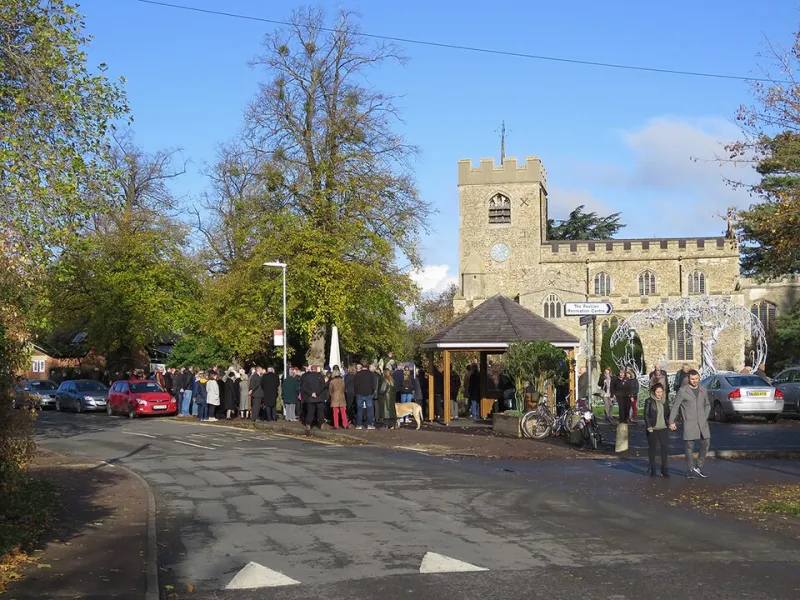
Photo: John Sutton , CC BY-SA 2.0, via Wikimedia Commons
At 11am on Sunday 8 November 2026, Langton will fall silent. The Last Post will sound, wreaths will be laid, and the village will do what it has done for generations: pause, remember and return to ordinary life. The ceremony itself appears almost effortless. A parade forms, a short service is held, names are read, and the crowd disperses.
Behind that hour, however, sits a file of paperwork. There is a road closure to secure, a risk assessment to update, marshals to brief, insurance to confirm and a budget line to approve. The silence is not organised by silence. It is organised by a small number of people working through a checklist.
The application before the applause
In England, closing a road for a parade is not a matter of putting out cones and hoping for the best. It requires a temporary traffic regulation order from the highway authority, normally the county council. For Langton, the parish council is the applicant. The clerk prepares the route, the times, the signage plan, the risk assessment and the letters to affected residents and businesses. The county council then makes the order.
That process takes weeks, sometimes months. It is not a decision about whether Langton should remember. It is a decision about how the village can remember safely. The order will specify the stretch of road to be closed, the hours of closure and the diversions. It will also require signs and, depending on the scale of the event, a traffic management plan.
This is where public money first enters the picture. The sums are small by council standards, but they are real: printing, temporary signs, barriers, radios, first aid cover and the clerk’s time. None of it is glamorous. All of it is necessary.
Volunteers, wreaths and the order of service
The Royal British Legion branch coordinates the wreath-laying and works with the clergy on the order of service. Uniformed groups provide young people to carry standards. Local volunteers act as stewards. The parish council enables the event rather than running it, but its permissions and practical support hold the arrangements together.
Poppy Appeal collections are separate from the cost of the ceremony. Donations to the appeal support welfare work, not the hire of a public address system. That distinction matters when residents ask who pays for what. The wreaths, the service sheets, the road closure and the marshalling all depend on different pots of money and different pools of goodwill.
The parish council’s contribution comes from the precept. It may be only a few hundred pounds, but it must be approved, minuted and accounted for. If the estimate is wrong, or if a late requirement appears, the clerk must find a solution without derailing the event.
Small sums, real exposure
Remembrance Sunday is a low-cost event with a high public profile. That combination can create complacency. A missing sign or an uninsured steward is not a budget problem; it is a safety problem. A late road closure order is not an inconvenience; it can mean cancelling the parade altogether.
The 2026 arrangements in Langton include a named lead, a deputy and a written checklist. That may sound bureaucratic for a village ceremony, but it is the difference between a tradition that survives and one that depends on a single person remembering every step.
What happens if a piece slips
If the road closure is not granted, the parade cannot safely use the carriageway. If too few marshals volunteer, the route may be shortened. If the clerk is unavailable, someone else must know which forms have been submitted and which calls have been made. If the public address system fails, the service can still go ahead, but fewer people will hear it.
None of these scenarios is dramatic. Each is ordinary. Together they explain why the organisation of Remembrance Sunday deserves more attention than it usually receives. The village is not simply remembering; it is choosing, year after year, to make remembrance possible.
When the silence falls on 8 November, it will be underpinned by a spreadsheet, a signed order and a rota. That is not a contradiction. It is how a modern village keeps an old promise.