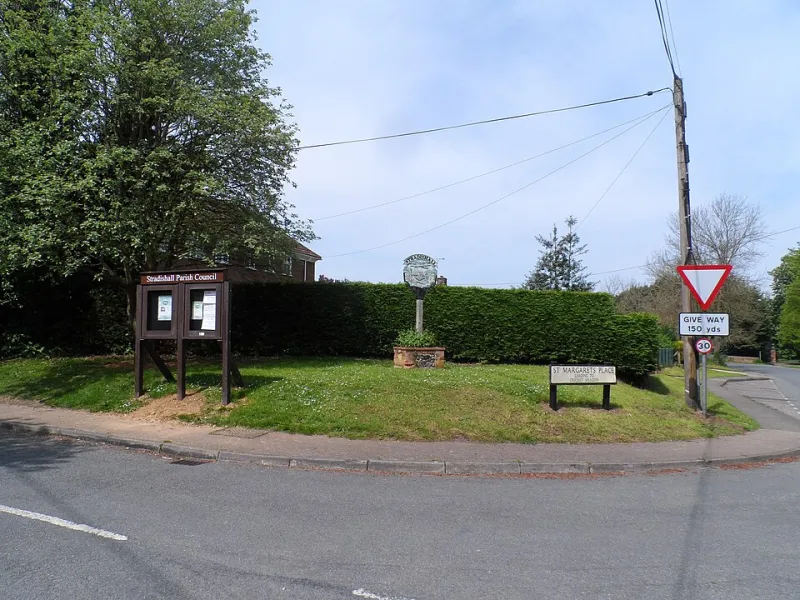
Frost Lines: How Langton’s Winter Gritting Routes Are Chosen
Photo: Mat Fascione , CC BY-SA 2.0, via Wikimedia Commons
As the first hard frost of the 2026–27 season is forecast, attention in Langton turns to a familiar winter question: which roads will be salted, and which will not. The answer is set out in policy documents, shaped by highway authority priorities and delivered through a mixture of council contracts, parish arrangements and, in some places, volunteer effort. It is a system that seeks to be consistent, but it inevitably leaves some residents looking at an untreated lane and asking why.
The route map and the rulebook
Langton Council does not grit every road in the parish. Responsibility for the highway network is split. Major routes, including the A-road corridor and the principal link roads serving the surrounding villages, are generally maintained by the county highway authority. Langton Council’s own winter service arrangements focus on a defined list of local roads that connect residential areas to schools, health facilities, shops and public transport. The published schedule is reviewed before each winter season and is available through the council’s website and noticeboards.
The key point is that gritting is not a universal service. It is a prioritised service. The council’s policy states that routes are assessed against a set of criteria, including traffic volume, gradient, accident history, access to essential services and whether the road forms part of a bus route. Roads that score highly are treated first. Roads that score lower may be treated only in prolonged severe weather, or not at all. The policy is designed to direct limited salt stocks and driver hours to where they are judged to have the greatest public benefit.
What the criteria reward
In practice, the criteria favour roads that carry the most people and the most essential journeys. A steep hill on a bus route will almost always outrank a flat cul-de-sac. A road serving a health centre or a primary school will usually be treated before a residential loop with no through traffic. The council also considers connectivity: whether an untreated road would isolate a community or leave residents unable to reach a treated route.
That approach is not unique to Langton. Highway authorities across the UK use similar frameworks, and they are regularly tested by residents who believe their road meets the threshold. The difficulty is that the criteria involve judgement as well as measurement. Traffic counts and accident records are objective, but the weight given to access to services or the needs of an ageing population is a matter of policy. When a road misses the cut, the explanation is often found in the scoring rather than in any single deciding factor.
Salt bins, volunteers and the limits of self-help
For roads outside the priority network, salt bins are the most visible form of support. Langton Council maintains a number of bins at locations it considers useful, and residents can report empty or damaged bins through the usual public services channels. The council’s position is that salt from these bins is for public highway use, not for private driveways, and that residents should use it sparingly. The bins are not a substitute for a gritting route. They are a supplement.
Volunteer gritting groups have also become part of the local picture. In some villages, residents have organised snow wardens and small teams to clear paths and spread salt on minor roads. The council has supported these efforts where it can, but it has also been clear about the boundaries. Volunteers cannot close roads, direct traffic or take on liability for the highway. Their work is best understood as community resilience rather than a formal winter service. It helps, but it does not change the route map.
Who pays, and how residents can press their case
The winter service is funded through the council’s general budget, with salt stocks and contractor costs reviewed annually. The 2026–27 allocation was agreed as part of the wider budget-setting process, and the council has said that the priority route list remains within the agreed envelope. That does not mean the list is fixed forever. The policy allows for reviews when circumstances change, such as a new housing development, a revised bus timetable or a sustained run of complaints about a particular road.
Residents who believe their road has been wrongly excluded can make a case. The most effective approach is to contact the council with specific information: the road name, the reason it matters, and any evidence of risk or isolation. A general complaint is less likely to prompt a review than a clear account of how the road functions in winter. The council’s published policy also sets out how decisions can be challenged through the usual committee process, although the scope for overturning a route assessment is limited.
A question of fairness, not just frost
The gritting map is ultimately a statement about priorities. It reflects what the council believes it can afford and what it believes the highway network should deliver. For those on a treated route, the system works quietly in the background. For those who are not, the absence of a gritting lorry can feel like a judgment on their neighbourhood. The council’s task is to explain the criteria clearly, keep the route list under review and ensure that salt bins and volunteer schemes are used where they can make a practical difference. The frost will come regardless. The question is how fairly the response is shared.