Logged On, Left Out? Mapping Langton’s Digital Village Square
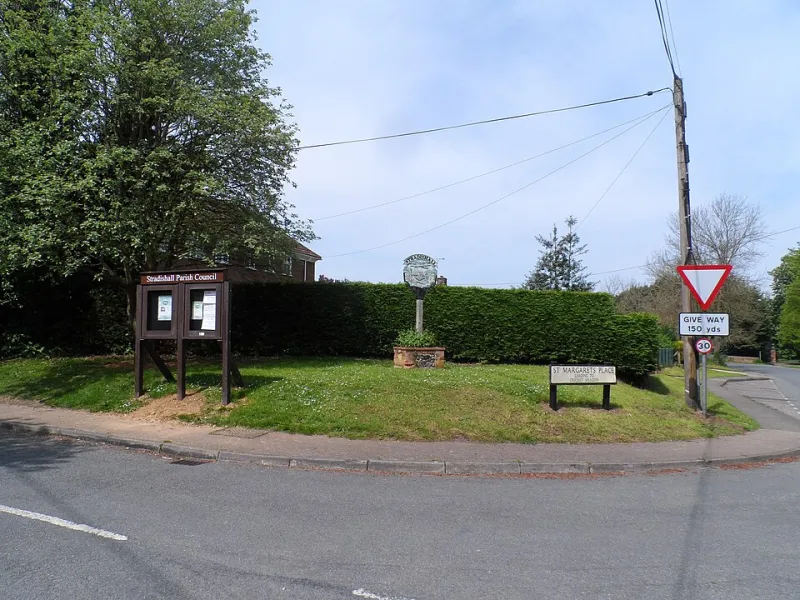
Photo: Bikeboy , CC BY-SA 2.0, via Wikimedia Commons
On the wall outside Langton Village Hall, the noticeboard still does what it has always done. It holds agendas, planning notices, a poster for a coffee morning and a faded appeal for a lost cat. But the busiest conversations in Langton now happen elsewhere. They happen on the parish council website, in a community Facebook group and in WhatsApp chains that most residents never see.
The result is a village square with several entrances. Some people walk through the official door. Some use social media. Some rely on a neighbour to tell them what has been decided. The question is whether Langton has a communications system or simply a collection of channels — and who is left standing outside.
Three channels, three sets of rules
The parish council website is the official record. It publishes agendas, minutes, financial information and statutory notices. It is where a decision should be documented and where a resident should be able to find the authoritative version of events.
The community Facebook group is different. It is usually run by volunteers, not the council. It may be lively, useful and well moderated, but it is not a statutory noticeboard. A post can be deleted. A comment can be turned off. A member can be removed. Those are reasonable choices for a community group, but they are not the same as a public record.
WhatsApp chains are more private still. They are excellent for quick coordination between allotment holders, parents or event volunteers. They are poor archives. A decision taken in a WhatsApp group may never appear on a website or a noticeboard. For residents outside the chain, it may as well not have happened.
Who holds the keys
The parish clerk manages the website and the official notices. Volunteer administrators manage the Facebook group. Local businesses run their own pages. Councillors may comment in personal capacities or official ones, and the distinction is not always clear to readers.
This creates an accountability gap. If a meeting time changes, which channel is correct? If a road closure is announced on Facebook but not on the website, has it been properly announced? If a councillor responds to a complaint in a comment thread, is that an official response?
A sensible principle is that the website should be the primary source, with social media used to point people towards it. Official notices should appear on the website and on the physical noticeboard. Facebook can amplify the message, but it should not replace the record.
The residents who are not in the room
Digital communication is often described as more accessible. For many residents, it is. For others, it is another barrier. Older people, people with disabilities, households without reliable broadband and residents who simply choose not to use social media can be missed by a system that assumes everyone is online.
A Facebook post may reach hundreds of people, but it will not reach everyone. A WhatsApp chain may coordinate a volunteer rota efficiently, but it excludes anyone who is not in the group. The old noticeboard is not nostalgia. It is infrastructure for people who are not in the digital square.
There is also the question of format. A PDF agenda may be technically available but difficult to read on a phone. A poster image may contain text that a screen reader cannot interpret. A website that is not updated regularly trains people to stop checking it.
A clearer communications policy
Langton Parish Council could adopt a short communications policy. It need not be elaborate. It could designate the website as the authoritative source, require official social media posts to link back to it, and confirm that the physical noticeboard will continue to carry key notices. It could set out who is responsible for updating each channel and how corrections are handled.
A monthly printed summary, distributed through the village hall, library and shop, would help residents who are not online. A named digital contact could support people who need help finding information. Community group administrators could be invited to a regular briefing, not to control them, but to reduce the chance of contradictory messages.
The deeper issue is not technology. It is inclusion. A digital village square can be faster and more open than a noticeboard, but only if someone is responsible for keeping it accurate and accessible. Without that, Langton risks creating two villages: one that is informed and one that hears about decisions after they have been made.
The noticeboard is still there. The question is whether the digital square is being built around it, or over it.