Half a Year in the Chamber: Grading Langton's New Council Against Its Own Words
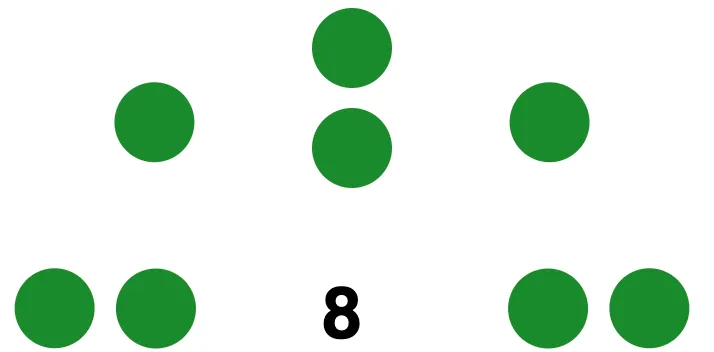
Photo: parliamentdiagram.toolforge.org, CC BY-SA 4.0, via Wikimedia Commons
Six months is a short life for a council and a long time for a village that was promised change. When Langton went to the polls on 7 May 2026, turnout reached 38 per cent — well above the low twenties recorded at the last full parish election — and nine of the fifteen seats changed hands. The result was not a landslide for any group but a muddle, and muddles take time to settle.
The Langton Times has now reviewed every set of published minutes since the new council's first meeting on 19 May, along with the committee terms of reference agreed in June and the public statements made during the campaign. The picture is of an administration that has moved quickly on procedure, more slowly on policy, and hardly at all on the pledges that require money or another authority's consent.
The new arithmetic, and what it did
The chamber no longer contains a majority bloc. Seven councillors sit as the Langton Forward group, five as Independents for Langton, and three are unaligned. The practical consequence was visible at the annual meeting, when the election of chair took two rounds and a second vote had to be taken on the appointment of the planning committee chair after a tie.
Since then the council has settled into an unusual but workable arrangement: committee chairs are split between groups, and the finance and general purposes committee is chaired by an independent. Officers report that this has slowed agenda-setting by roughly a fortnight per cycle but has also produced more amendments accepted without division.
The scorecard
The table below compares the principal campaign pledges with what has actually been transacted. Status is judged on the council's own record, not on intention.
| Pledge | Status after six months | Evidence |
|---|---|---|
| Publish draft minutes within ten working days | Kept | All but one set published within eight days since June |
| Quarterly residents' forum | Kept, attendance thin | Three held; average attendance 21, of whom 9 were councillors |
| Establish a youth council | Parked | Working group formed in July, no meeting minuted since September |
| Review the allotment waiting list | Partly kept | Review commissioned; 11-year list unchanged pending site survey |
| 20mph limit on School Lane | Parked | County officer advice requested in August; reply still awaited |
| Biodiversity verge pilot | Kept, scaled down | Three verges instead of seven, after contractor costs |
| Webcast council meetings | Rejected | Costed at £3,200 a year; motion lost 8-6 in October |
| Annual transparency report on spending | In progress | First draft due at December finance committee |
Where procedure became substance
The most consequential changes have been procedural, and they matter more than they sound. The planning committee now publishes officer reports and consultee responses a full five working days before meetings, a reform that has already drawn two additional public representations on the Mill Lane application. Delegated decisions must be logged within three days. And the council has adopted a standing item in which each committee reports what it has declined to do, which is a rarer discipline than it should be.
None of this alters the council's limited legal powers. As this newspaper has noted in relation to the neighbourhood plan, a parish council can shape, object and persuade; it cannot build houses, set fares or repair a county road. Two of the pledges that appear as parked above are parked precisely because they belong to Surrey and to the bus operator respectively.
The engagement question
Residents' forums have been held, but the audience has not widened. Officers' own note for the September forum records that 12 of the 21 attendees had previously spoken at a council meeting. The decision to decline webcasting on cost grounds was defensible, but it leaves the council's claim to be more open resting on documents rather than on access.
The youth council is the pledge most often raised with councillors in the village, and the one with the least to show. A working group of three councillors met twice in the summer and corresponded with the secondary school; nothing has been minuted since 14 September. The chair of the community engagement committee told October's meeting that the group was 'reconsidering the model' — a phrase that in council minutes usually precedes a quiet burial.
What residents should watch next
Three dates will determine whether the first year reads as steady consolidation or as drift.
- December finance committee. The draft transparency report and the first indicative precept figures for 2027–28 will be tabled. Pledges without a line in this budget are unlikely to be delivered before the next elections.
- The neighbourhood plan referendum. If the plan passes, the council gains a document it can point to in planning decisions; if it fails, the planning committee's new openness will be tested without that cover.
- The Mill Lane and School Lane applications. Both are expected to be determined in the first quarter of 2027. They will show whether the new committee's published reports translate into different decisions or merely better-explained ones.
There is also a quieter risk. Two councillors have missed four or more consecutive meetings, and one seat in the north ward has been vacant since a resignation in September. Under the council's own rules, a by-election must be requested by ten electors; none has been. A council elected on a promise of renewal can ill afford to shrink by attrition.
Six months in, the honest verdict is that Langton's new council has kept the promises that cost nothing but discipline, and deferred the ones that cost money or depend on others. That is not unusual. Whether it becomes a pattern is now a question of December's budget, not May's manifesto.