Divisions That Linger: Reading Langton Council’s 2026 Voting Record

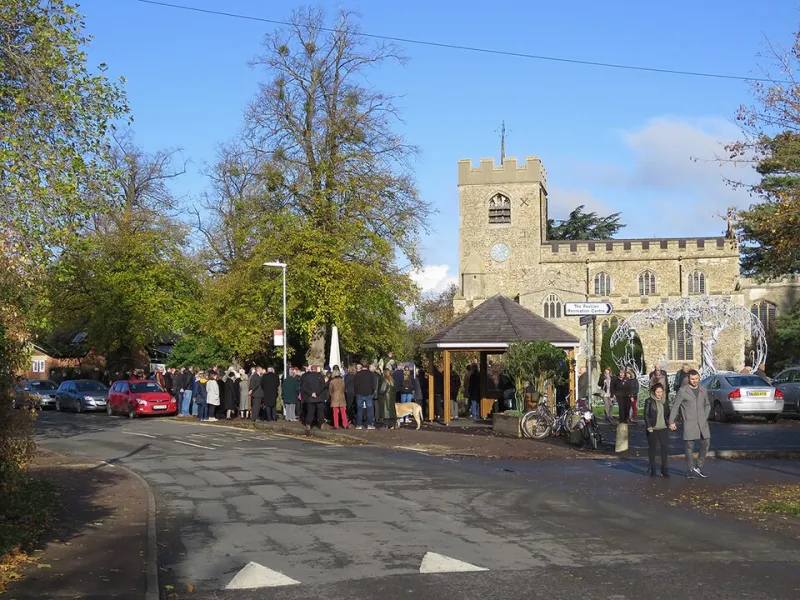
Photo: Dmytro Petishkin, CC BY 4.0, via Wikimedia Commons
Council votes rarely announce themselves. They arrive in agenda packs, are settled in a few minutes, and are then buried in minutes that few residents have the time to read. Yet the decisions taken in 2026 will be felt across Langton in 2027: in the traffic on Manor Road, in the bills that land in April, in the state of the public toilets on Market Street and in the quality of the walk to school along Mill Lane.
This is not a scorecard of winners and losers. It is a reading of the public record — five divisions that carry consequences beyond the chamber, set out in plain English. Residents who want the full detail can inspect the agendas and minutes on the council’s website, or ask for paper copies at the parish office.
The Manor Road Outline Application
In February, councillors voted 8–5 to grant outline permission for 38 homes on land off Manor Road. The application had been before the council in various forms, and the debate turned on drainage, construction traffic and the proportion of affordable homes. The permission is outline only: it establishes the principle of development, not the final design. Matters such as layout, appearance and landscaping are reserved for a later stage.
What this means for 2027 is practical. Residents should expect reserved-matters submissions, further consultation and, if those are approved, the beginning of groundworks. The section 106 agreement attached to the permission is meant to secure contributions towards local infrastructure, including a footway improvement and drainage works. Whether those obligations are delivered on time is a question the council will need to monitor — and one that residents can legitimately pursue at public meetings.
The 2027–28 Fees and Charges Schedule
In September, members approved the fees and charges schedule for the next financial year by 11 votes to 2. The schedule covers the discretionary services that residents use most often: garden waste subscriptions, car park season tickets, village hall hire and allotment rents. The headline changes were modest — a £6 rise in the annual garden waste subscription and an increase in the hourly rate for hall hire — but taken together they represent a real cost for households that rely on several services.
The council’s position is that discretionary services should recover their costs rather than be subsidised by the general precept. Those who opposed the schedule argued that cumulative increases deserve more scrutiny, particularly for allotment holders and community groups. The practical effect will be seen in April 2027, when renewal notices are issued. Residents who pay by direct debit should check the new amount; those who do not may wish to budget for the change.
The Market Street Toilet Transfer
In June, councillors voted 9–4 to lease the closed public toilets on Market Street to the Langton Community Trust and to provide an £18,000 refurbishment grant. The toilets had been shut since the previous maintenance failure, and the building had become a visible symbol of the council’s difficulty in funding public conveniences.
The arrangement is not a straightforward reopening. The trust will take on day-to-day management, opening hours and cleaning, while the council retains ownership of the building. The grant is intended to cover initial repairs, but the longer-term question — who pays for replacement fixtures and structural work — remains only partly answered. If the trust meets its target, the toilets could reopen by Easter 2027. Residents should watch for the trust’s volunteer recruitment and for the terms of the lease, which are public documents.
The Street Lighting Pilot
In July, the council voted 7–6 to replace the remaining sodium street lights with LED units and to trial part-night dimming on five residential streets. The division was close, reflecting genuine disagreement about safety and amenity. Supporters pointed to energy savings and lower maintenance costs; opponents raised concerns about darker pavements and the effect on older residents and people walking home after dark.
The pilot will run for six months before a review. That review matters for 2027 because it will determine whether dimming is extended, modified or abandoned. Residents on the affected streets have a direct interest in reporting problems — faulty sensors, uneven lighting or areas that feel less safe — through the council’s usual channels. The energy savings are real, but so are the lived effects of darker streets, and both should be part of the assessment.
The Mill Lane Footway and Crossing
In October, members voted 10–3 to allocate £74,000 of community infrastructure levy money to design and construct a raised crossing and footway on Mill Lane. The scheme is intended to improve the walking route to the primary school and to slow traffic at a junction that has long been identified as awkward for pedestrians.
The allocation is a significant step, but it is not the end of the process. Design work, statutory consultation and final costings must still be completed, and construction is unlikely before the latter part of 2027. The council has said the scheme will be subject to final estimates, which is a prudent caveat rather than a guarantee. Parents, residents and local businesses should engage with the design stage while changes are still possible.
Why the Record Matters
These five decisions are not equally significant, and not all will unfold as planned. But they share a common feature: each will require follow-through in 2027. Outline permission must be followed by reserved matters; a fees schedule must be translated into bills; a lease must be managed; a lighting pilot must be reviewed; a crossing must be designed and built.
That follow-through is where accountability lives. Residents can read the minutes, attend meetings and ask councillors how each commitment is progressing. The jargon can be learned — outline permission is not the same as a final design, and the community infrastructure levy is not general council tax — but the principle is simple. A vote is not the end of a decision. It is the point at which residents are entitled to watch what happens next.
As 2026 draws to a close, Langton Council’s record is public. The useful question for 2027 is not simply how councillors voted, but whether the consequences of those votes are delivered, explained and, where necessary, revised.