From Sofa to Summons: The Life Cycle of a Langton Fly-Tipping Report
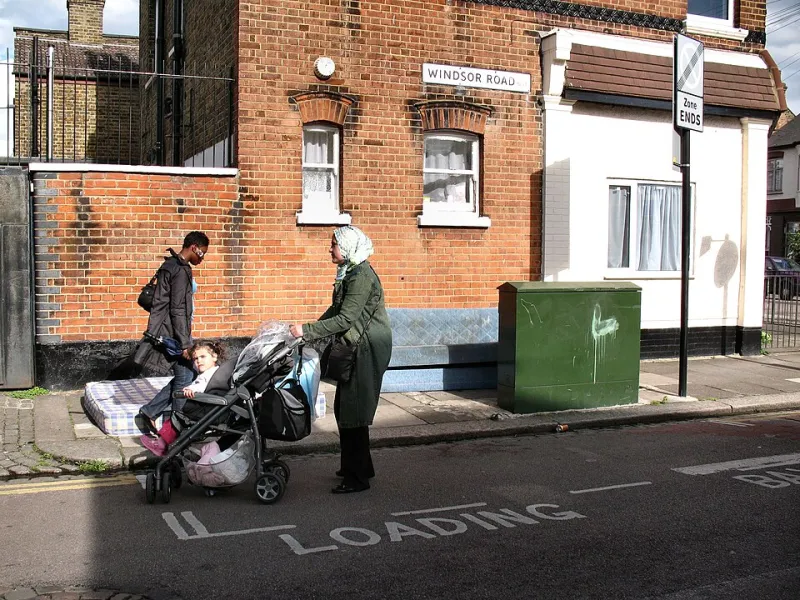
Photo: Alan Stanton, CC BY-SA 2.0, via Wikimedia Commons
The call usually comes from someone walking a dog. A sofa has appeared overnight in a field gateway on one of the lanes east of the village, tipped on its side, cushions still attached. What follows is a sequence of decisions made by people the reporter will never meet, governed by targets, budgets and a legal test that is harder to satisfy than most residents assume.
The first hours: logging the report
The report enters through the council's contact form or by telephone and is given a reference. From that moment the case has a clock on it. Hazardous material — fly-tipped asbestos, drums, anything that might be chemical — is treated as urgent and attended the same or next working day. A sofa is not hazardous. It is classified as household waste deposited without authority, and it joins a queue with a stated clearance target measured in working days.
Where the waste sits matters as much as what it is. Land owned or managed by the council is cleared by the council. Waste on a private field, a farm track or a verge in front of a property is the landowner's responsibility, and the council's role shrinks to investigation. A significant share of reports are resolved by telling the reporter, politely, that the item is not the authority's to lift.
Clearance: who lifts it and who pays
The clearance itself is contracted. A crew attends with a vehicle, photographs the waste in situ before loading, and records the volume and composition. That photographic record serves two purposes: it evidences the clearance for the authority, and it is the first piece of material that may later support enforcement.
Sorting the load is where cases are sometimes made. Waste is not a single substance; a bag may contain post, packaging with a name and address, a delivery note, a prescription label. Crews are instructed to look for such material and to preserve it. When something identifiable is found, the clearance becomes an investigation rather than a tidy-up.
Evidence: what makes a case
Enforcement rests on showing that a person deposited waste, or permitted it to be deposited, without the necessary authority. In practice that means connecting an item to a household. The strongest cases involve multiple corroborating items — correspondence, a delivery address, a distinctive container — rather than a single fragment.
A second route exists through the duty of care. Any householder arranging for someone else to remove waste is legally obliged to check that the carrier is registered and to keep a written description or transfer note. Where a resident has handed waste to an unregistered man with a van, the authority may pursue the resident as well as, or instead of, the carrier. This is the part of the law least understood in the village and the part that produces the most indignant telephone calls.
Cautions, fixed penalties, court
The council's published enforcement framework sets out a graduated response. A first matter may be resolved with a warning letter or a formal caution where the evidence is thin but the connection plausible. A fixed penalty notice offers an alternative to prosecution and avoids the cost of court. Prosecution is reserved for the more serious cases: commercial-scale tipping, repeat offending, or obstruction of an investigation.
Those cases are a small minority. Most fly-tips in and around Langton are the residue of a house clearance or a garden tidy — domestic in scale, opportunistic in execution, and difficult to attribute with the certainty a court requires. The gap between suspicion and proof is where most investigations quietly end.
Where the cost lands
The arithmetic is uncomfortable. Clearance, disposal, staff time and legal work all fall initially on the authority — that is, on the ratepayer — and recovery through penalties is partial at best. Where the waste lies on private land, the cost transfers to the landowner, who may face a bill for removal with no realistic prospect of identifying the person responsible.
That is the awkward truth of fly-tipping as a local policy problem. It is often discussed as a matter of enforcement, but it is equally a matter of cost allocation, and the person who tipped the sofa is frequently the only party who does not pay for it.
What residents can usefully do
Report precisely: location, what the item is, and any identifying detail visible from the roadside without disturbing it. Photograph before touching. If you employ someone to remove waste, ask for their registration number and keep the paperwork — the small inconvenience of that request is the difference between a defence and a penalty.
And expect the process to be slower and more conditional than a single phone call suggests. The sofa will be gone within days. The question of who put it there may remain open for considerably longer.