Cut and Uncut: Reading Langton's Verge Schedule Against the Grass It Leaves Standing
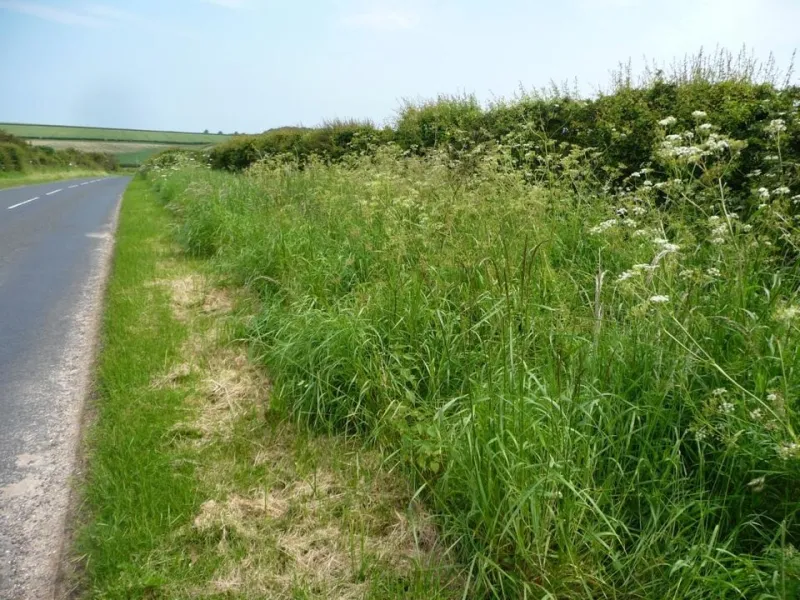
Photo: Christine Johnstone , CC BY-SA 2.0, via Wikimedia Commons
Every summer, the same argument returns to Langton: the grass is either being cut too often or not often enough, and the answer depends entirely on which verge you are standing beside. This year the council has published its mowing map in fuller detail than before, listing each road, its classification and the number of cuts it is due between March and October. The document is short, the map is legible, and yet it explains less than residents might hope.
What the schedule actually sets out
The map divides the parish's roadside grass into three working tiers. Primary routes — the spine roads that carry the bus and the school traffic — are scheduled for the most frequent cuts, on the reasoning that visibility at junctions and the safety of pedestrians walking without a footway outweigh other considerations. Secondary lanes receive a reduced programme. The remainder, largely narrow rural edges with no dwellings directly adjoining, are cut once or twice with a late-season tidy.
Alongside the tiers sits a separate register of wildflower strips: lengths of verge where cutting is deliberately deferred, usually until late summer, to allow seed to set. The council's grounds team maintains that these strips are not neglected ground but managed habitat, and that a strip left long in June is doing a job a close-cut verge cannot.
The criteria behind a wildflower strip
The selection of those strips is where the schedule is least transparent. In practice, three tests appear to apply. The first is ecological: whether the verge already supports a sward worth protecting, or sits adjacent to a designated site. The second is safety: strips are not permitted where sightlines would be compromised, which is why the mowing around junctions is kept tight regardless of the tier. The third, less often stated, is practical — whether the ground can be reached and worked by the contractor's equipment without damage to kerbs or drainage.
Residents who have asked for a strip near them report varying outcomes. Some have received a strip and a small marker post; others have been told their verge is on a bus route, or that a footway runs along it, and therefore cannot be entered onto the register.
Following the complaints log
The council's contact records show a seasonal pattern that will surprise no one: reports of overgrown grass peak in late May and again in July, and fall away sharply after the first cut of August. Most concern the same handful of categories — grass encroaching on a footway, a corner where visibility has narrowed, and the edges around bins and lamp columns, which strimmers reach later than mowers.
It is worth noting what the schedule does not promise. A verge listed for four cuts is not cut on four fixed dates; the programme is sequenced by growth and weather, and a wet fortnight can push every date back. When residents say the map is wrong, they are often describing that slippage rather than a failure to cut at all.
The arithmetic of a cut
The cost of the programme is not published as a single figure, but the contract's structure makes the trade-offs visible. Cutting is charged by the visit and by the length, and the difference between a tier and the one below it is material over a season. Every wildflower strip, every deferred cut and every stretch removed from the schedule represents a sum the council does not spend — a fact that sits awkwardly beside the argument that the strips exist purely for biodiversity.
That is not to say the ecological case is decorative. It is simply to acknowledge that a schedule shaped by a fixed budget will always be a schedule of priorities, and the priorities are not all written down in the same place.
What a resident can usefully do
Complaints about a sightline are acted on fastest when they are specific: a location, a direction of travel, and what the grass is obscuring. Requests for a new wildflower strip are more likely to succeed where the verge is wide, unlit and away from a junction — and where a neighbour is willing to say the same thing in writing.
The mowing map is a reasonable document. It is not a contract, and it is not a promise that the grass outside your window will be cut in the week you expect. Residents who read it as a description of intent, rather than a timetable, will find it answers most of their questions — and explains, if not always to their satisfaction, why some verges are left standing.