The 47 in the Balance: Langton’s Bus Route, Its Funding and the Case for Keeping It
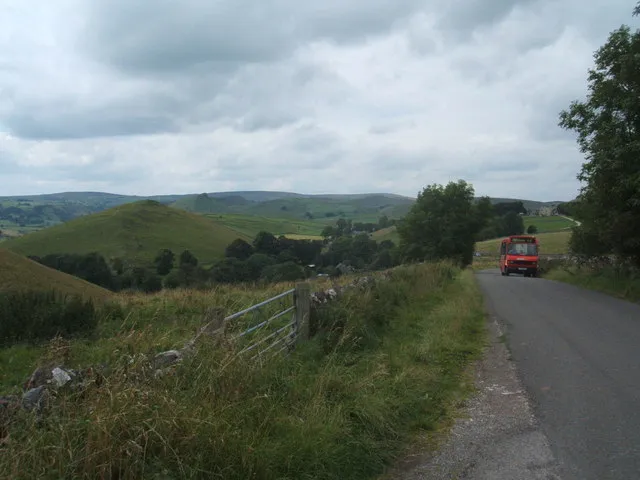
Photo: Peter Barr, CC BY-SA 2.0, via Wikimedia Commons
On a wet Tuesday morning, the 07:20 from Langton to the district centre is rarely full. It is rarely empty either. For the passengers who depend on it — sixth-formers, shift workers and older residents travelling to appointments — the question is not whether the bus is busy enough to be commercial. It is whether the council will keep paying to support a service that the market alone will not provide.
That question is now live. The district council has opened a consultation on the future of supported bus services, including Route 47, which links Langton with neighbouring villages and the district centre. The consultation closes on Friday 11 December 2026, and its results will feed into the council’s 2026 budget settlement and the supported-service contract due to begin in April 2027.
What Route 47 does now
Route 47 currently provides six weekday return journeys between Langton, the surrounding villages and the district centre. The first bus leaves Langton at 07:20 and the last returns at 18:40. On Saturdays there are four journeys; there is no Sunday service. The route is run by a local operator under contract to the council, rather than on a purely commercial basis.
The latest passenger count, taken in spring 2026, recorded an average of 104 weekday boardings. That is down from 131 in 2019. The decline is familiar across rural England: more shopping online, more remote working and a car-dependent pattern of development have all taken a toll. But the figures also show that the route is far from empty. The morning and early afternoon journeys carry a steady mix of students, older people and workers without access to a car.
The subsidy question
Route 47 is not commercially viable. The council supports it through the rural bus service grant and a network support payment. In papers published alongside the consultation, officers estimate that reducing the timetable to three journeys a day and withdrawing the Saturday service would save about £48,000 a year. The council stresses that no decision has been taken and that the consultation is genuine.
Even so, the direction of travel is clear. Rural bus funding is under pressure, and the council says the grant it receives from central government has not kept pace with fuel, staffing and maintenance costs. The choice facing councillors is not between a generous service and a lean one. It is between a reduced service and, potentially, no service at all on some days.
Who would feel a cut first
The first group is older residents. For many, the bus is not a convenience but the only practical way to reach a GP surgery, a pharmacy or a hospital appointment. The second is workers. Langton’s economy relies on people who commute to the district centre, often for shifts that begin before a car-owning household is awake. The third is students. The 07:20 is timed for the start of the school and college day, and the 16:20 return is timed for the end of it.
A thinner timetable would not affect everyone equally. Households with two cars might barely notice. Households with none would notice immediately. That is the distributional question at the heart of the consultation, and it is why the council’s own equality assessment will be scrutinised as closely as the savings figure.
How to take part before the budget
Responses can be made through the council’s consultation portal, by email to its public transport team, or by post. Paper copies are available at Langton Library, the village hall and the council office. A drop-in session will be held at Langton Village Hall on 24 November 2026 from 15:00 to 19:00.
Residents are asked to say which journeys they use and why, what alternatives exist, and what difference a reduced service would make. It helps to be specific. A submission explaining that the 09:15 is the only way to reach a hospital appointment carries more weight than a general objection to cuts. Businesses can set out the effect on staff recruitment and retention. Students can explain the cost and difficulty of alternative travel.
Those who prefer to speak can attend the drop-in or ask Langton Parish Council to make a formal representation. The consultation is not a referendum, but responses are reported to the cabinet and must be summarised in the decision papers. The deadline is 11 December 2026.
What community transport can and cannot replace
Langton has a community car scheme, a Dial-a-Ride service and a bookable minibus for group trips. These are valuable, and they are likely to become more important if the fixed timetable is reduced. But they are not a direct substitute. They usually require advance booking, depend on volunteer availability and may not run in the evening or at short notice. They can serve a hospital appointment; they cannot easily serve a daily commute.
That distinction matters to the consultation. Community transport can fill gaps, but it cannot replace a scheduled route for people who need to travel regularly and predictably.
The decision ahead
For now, the 47 still runs. The consultation is the point at which residents can influence whether it continues in its present form. The council will report the responses before the 2026 budget is finalised, and the contract for supported services will follow. The case for keeping the route will not be won by nostalgia. It will be won by evidence about who uses the bus, why they use it and what happens if it goes.