Ten Names, One Question: Weighing Langton’s Parish Poll Against Its Price Tag
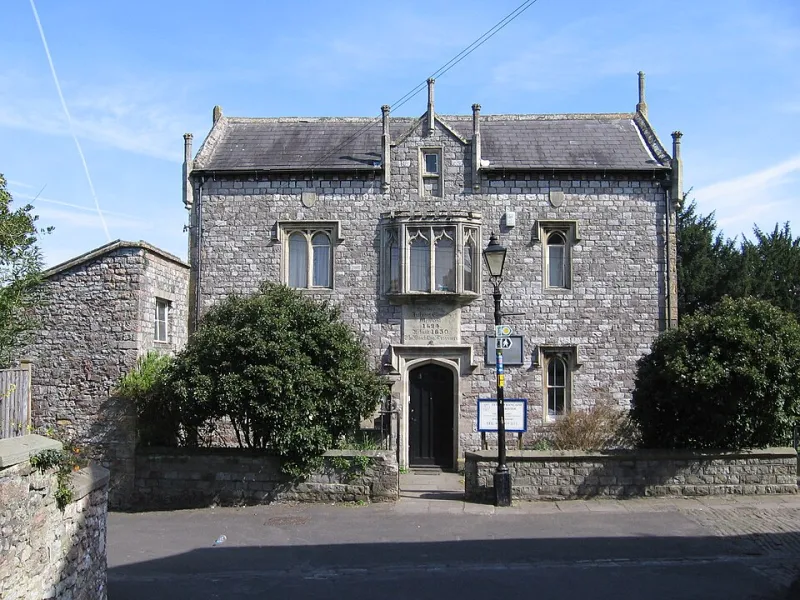
Photo: William Avery, CC BY-SA 2.5, via Wikimedia Commons
It is one of the quieter corners of local democracy: a mechanism that can put a single question to every elector in a parish, yet is invoked so rarely that many residents have never seen one. Langton has not held a parish poll in more than a decade. There is no live poll in 2026. But as councils across England look for ways to demonstrate that decisions are being heard, the parish poll deserves a closer look — not least because the bill arrives whether or not the answer changes anything.
A power written into the rules
A parish poll is not a referendum on a council budget, nor a recall vote, nor a substitute for a formal consultation. It is a specific statutory device available in England. At a parish meeting, ten electors — or one-third of those present, whichever is the greater number — may demand a poll on a question relating to the parish. The question must be clear, relevant to the parish and capable of being answered. It cannot be used to settle a matter that lies outside the parish council’s remit, and it cannot be used to overturn a decision that the law reserves to another authority.
The demand is made at the parish meeting itself. Residents cannot simply sign an online petition or send a letter to the council offices and expect a ballot to follow. The meeting is the gateway. Once a valid demand is made, the returning officer at the district council — in Langton’s case, the officer responsible for elections at Langton District Council — arranges the poll. That means polling places, ballot papers, staff, notices and a count. The question is put to the parish electorate, not to the council chamber.
From the village hall to the ballot box
The practical steps are orderly but not instant. A demand is recorded, the question is checked for legal validity, and the returning officer sets a date. For a parish of Langton’s size, a stand-alone poll would probably mean using a familiar polling station such as Langton Village Hall, with the usual paraphernalia of local elections: presiding officers, poll clerks, ballot boxes and a verification and count. It would look like a mini-election, with one question on the paper.
That familiarity can be misleading. A parish poll is not a general election. Turnout is often low, and the result is not binding on the parish council. It is a recorded expression of elector opinion. A council that ignored a clear poll result would not be acting unlawfully, but it would be doing so in the full light of a public vote. That is the political weight of the device — real, but not absolute.
What it costs, and who pays
The cost is not trivial. A stand-alone parish poll requires the returning officer to designate polling places, appoint staff, print ballot papers and notices, verify the result and publish it. For a parish of Langton’s size, a four-figure sum is the realistic starting point; if the poll is held separately from any other election, the total could edge towards five figures. Comparable polls elsewhere in England have been reported at between £3,000 and £10,000 in recent years, with turnout sometimes in single figures.
The expense falls on the public purse and is usually met through the parish council’s budget, which means the precept. In other words, the same residents who asked for the vote would pay for it through their council tax, alongside everyone else. That is not an argument against parish polls. It is simply the financial context in which any demand should be considered.
A check, a gesture, or both?
The case for the parish poll is straightforward. It gives electors a direct route to a ballot between elections. It can force a council to test public opinion on a specific proposal — a closure, a sale, a change of use, a significant spending decision — without waiting for the next scheduled vote. It can also give a council a clear mandate for a difficult choice. In places where trust in local decision-making is thin, the mere existence of the power can act as a check.
The case against is equally clear. Parish polls are expensive relative to their turnout. They can be dominated by a well-organised group. They produce an advisory result that may be ignored. And they can reduce complex decisions to a binary question that does not capture the trade-offs involved. A poll on a village hall refurbishment, for example, cannot easily explain the difference between a modest repair and a full rebuild, or set out the effect on the precept.
Both arguments have merit. The parish poll is neither a magic wand nor a pointless relic. It is a blunt instrument, and blunt instruments have their uses.
What it would take in Langton
For Langton, the route is clear in principle. A parish meeting would need to be held. Ten electors, or one-third of those present if that is greater, would need to demand a poll on a single question. The question would need to be relevant to the parish and legally sound. The returning officer would then set a date and produce a cost estimate. Until a question is lodged, any figure is an educated guess.
That is why the parish poll is best understood as a conditional power rather than a standing threat. It sits in the background, rarely used, available when residents believe a decision merits a parish-wide vote. Whether Langton ever reaches for it is a matter for its electors. The mechanism is there. The price tag is there too.